Monday, October 25, 2010

Essay 3

The Effects of Cocaine Use on its Users
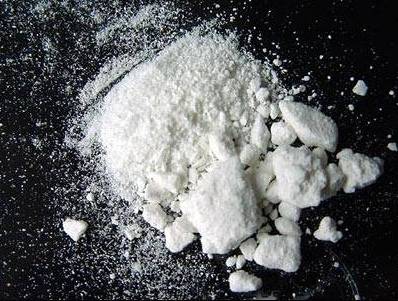
        Across the United States, citizens abuse many different drugs in order to obtain a high that elevates their mood. While these drugs are all extremely serious, cocaine is an especially dangerous substance that over one-and-a-half million Americans use, despite the negative effects and consequences resulting from its abuse ("About.com"). Many cocaine users are drawn to the drug after experiencing unhealthy influences in their childhood such as unstable families and neighborhoods. Searching for euphoric feelings, an excited state, and increased sociability to escape the devastating influences, cocaine users are often unable to break the addiction that is simultaneously destroying their bodies (Arkangel). By choosing abuse cocaine, users enter a debilitating three step process that consists of depression, addiction, and withdrawal.

        A serious problem that cocaine causes in its users is depression. When cocaine is taken, it circulates through a person’s bloodstream and eventually reaches the brain and its pleasure receptors. The cocaine then increases the levels of neurotransmitters in the brain, such as serotonin and dopamine, which in turn cause the user to experience feelings of extreme pleasure, known as euphoria (Arkangel). After the drug begins to wear off, these neurotransmitter levels once again return to their normal state, and sometimes lower, leading to extreme depression and a craving for more cocaine ("NIDA"). Depression resulting from cocaine use is so severe that according to the Board Certified Psychiatric Pharmacist, W. Alexander Morton, "cocaine has been found to be present in as high as 18% to 22% of [suicide] cases" (Morton). Without cocaine to replenish the depleted amounts of serotonin and dopamine in a user’s brain, the person will suffer from high emotional stress and anxiety. These feelings of depression may frequently lead to a dependency on cocaine as the only way to elevate a person’s mood, which will eventually turn into a binding addiction (Hayon).

      After a person decides to take more cocaine in order to raise his mood, the user enters a long struggle in the form of addiction. The change in the amount of dopamine in a cocaine abuser’s brain causes the abuser to form a bond with cocaine, taking increasing amounts of the drug in order to relieve his depression. As the brain adapts to the effects of the cocaine, a tolerance is built up, forcing the individual to intake higher doses of the drug in order to retrieve the euphoric feeling ("NIDA"). With depression continually worsening and the urge to take cocaine increasing, Dr. Michael Bozarth of Concordia University states that "cocaine is at least as addictive as heroin" (Eckholm). While cocaine abusers continue to supplement their addictions, the habit will lead to digestive problems, a breakdown of the central nervous system, physical deterioration, or even death within its users (Cocaine). If an addict decides that he needs or wants to remove himself from the addictive cycle, he must enter the last stage of cocaine use, withdrawal.

     When a cocaine addict chooses to end their addiction, the individual must experience an immediate process known as withdrawal. When an addict’s body craves more cocaine but does not receive it, the user begins to experience an emotional and physical decline that can last from a few hours to several days (Hartley). While going through withdrawal, the individual may experience sleep disturbances, depression, nausea, shaking, and muscle pain as a part of the healing process ("Symptoms"). The depression experienced during withdrawal is very enduring because, according to W. Alexander Morton, "serotonin [is] thought to be significantly lowered due to the chronic depletion caused by cocaine use" (Morton). In cases of daily use of cocaine, individuals may even experience the effects of withdrawal for months following the last period of use, in which case many of those suffering use sedatives or alcohol to ease their pain ("Cocaine Withdrawal").Withdrawal can be exceptionally painful and dangerous, yet it is the final step in the cocaine addiction process that may result in an addict’s ability to eliminate their dependency on cocaine forever.

     The decision to use cocaine or not is an event that may dramatically impact a person’s life in various ways. Whether an individual is influenced by a negative neighborhood or by an unhealthy family environment, cocaine use is a dramatic event that can destroy a human’s life if it is not controlled, addressed, and corrected. As lives across the nation and the world are affected by cocaine and the consequences of its use, humans continue to suffer as the drug overtakes individuals and all aspects of their lives. By choosing abuse cocaine, users enter a debilitating three step process that consists of depression, addiction, and withdrawal.


Works Cited
"About .com: Alcoholism." About.com. The New York Times Company, Sep 2009. Web. 20 Oct 2010. http: //alcoholism.about.com/cs/coke/f/coke_faq03. htm
Arkangel, Carmelito. "Cocaine Abuse." eMedicineHealth. WebMD. Inc., 08 Oct 2005. Web. 20 Oct 2010. http ://www.emedicinehealth.com/cocaine_abuse/page2_em
"Cocaine." The Columbia Encyclopedia, Sixth Edition. 2008. Encyclopedia.com. 24 Oct. 2010 <http://www.encyclopedia.com>.
"Cocaine Withdrawal." Medicine Plus. U.S. National Library of Medicine, 19 Aug 2010. Web. 24 Oct 2010. <http://www.nlm.nih.gov/medlineplus/ency/article/000947.htm>.
Eckholm, Erik. "Cocaine's Vicious Spiral: Highs, Lows, Desperation." NYTimes.com. The New York Times, 17 Aug 1986. Web. 24 Oct 2010. <http: //www./nytimes.com/<http://<http://www.nytimes.com/1986/08/17 /we eki nreview/cocaine-s-vicious-spiral-highs-lows-desperation.html>.
Hartley, Elizabeth. "What to Expect from Cocaine Withdrawal." About.com. The New York Times Company, 12 Aug 2010. Web. 24 Oct 2010. <http ://addictions.a bout.com/od/cocaine/a /W hat-To-Expect-From-Cocaine-Withdrawal.htm>.
Hayon, Rachel. "The Symptoms of Addiction Withdrawal-Different Drugs, Different Dangers." Addiction Search. Addiction Search, 23 Oct 2010. Web. 24 Oct 2010. <http ://www.<http://www.addicti onsearch.com/treatment_articles/article/the-symptoms-of-addiction-withdrawal-different-dru gs-different-dangers_67.html
Morton, W. Alexander. "Cocaine and Psychiatric Systems." PubMed Central. National Center for Biotechnology Information, 8 July 1999. Web. 24 Oct 2010. <http ://www.ncbi.nlm.nih.gov /pmc/articles/PMC181074
"NIDA InfoFacts: Cocaine." National Institute on Drug Abuse. National Institute on Drug Abuse, Mar 2010. Web. 24 Oct 2010. <http://www.nida.nih.gov/Infofacts/cocaine.html>.
"Symptoms of Cocaine Withdrawal." WrongDiagnosis. Health Grades Inc., 6 Oct 2010. Web. 24 Oct 2010. <http: //www.wrongdiagnosis.com/c/cocaine_withdrawal/symptoms.htm>.

Wednesday, October 6, 2010

Essay 3 Organization

Thesis
The decision to use cocaine leads to a three step chain of events including depression, addiction, and withdrawal.

Paragraph 2
  • Using cocaine raises dopamine and serotonin while it is affecting the body
  • Levels of serotonin and dopamine drop significantly after cocaine use
  • Users need more cocaine to elevate their mood
  • 18-22% of suicides have been found to be related to cocaine
Paragraph 3
  • Tolerance to cocaine is built up and more is needed to get a person high
  • Addiction sets in as a person needs the drug to overcome depression
  • "Cocaine is at least as addictive as heroin"
  • Long-term use can result in sleep disturbances, deterioration of the nervous system, and death
Paragraph 4
  • Cravings for cocaine can last for months following the end of long-term use
  • Withdrawal can cause shaking, nausea, muscle pain, and depression
  • Serotonin levels are thought to be severely depleted due to cocaine use
  • People experiencing withdrawal may take sedatives to ease the pain

Tuesday, October 5, 2010

Drugs

Why do so many people use drugs?
Are there really differences between medicinal and illegal drugs?
Are medicinal drugs beneficial to society?
Can the spread of illegal drugs be stopped?
What leads people to the use of drugs?

The use of cocaine often causes addiction, depression, and withdrawl within its users.
What is a drug?
Drug= 1. a substance used as a medication or in the preparation of medication
          2.something and often an illegal substance that causes addiction, habituation, or a marked change in consciousness


Drug effects

http://www.addictionca.com/illegal-drugs.htm
  • Drug Abuse Warning Network (DAWN) estimates that 1,449,154 Emergency Department visits were related with drug misuse or abuse in 2005
http://www.acep.org/pressroom.aspx?id=26004
  • Illegal drugs  account for about 52,000 drug-related deaths and an estimated $160 billion in economic costs each year, according to the Office of National Drug Control Policy.
http://en.wikipedia.org/wiki/Substance_abuse#cite_note-9
Burke PJ, O'Sullivan J, Vaughan BL (November 2005). "Adolescent substance use: brief interventions by emergency care providers". Pediatr Emerg Care 21 (11): 770–6. PMID 16280955. 
  • Drug abuse including alcohol may lead to health problems, social problems, morbidity, injuries, unprotected sex, violence, deaths, motor vehicle accidents, homicides, suicides, physical dependence or psychological addiction
Violence
http://www.whitehousedrugpolicy.gov/publications/factsht/crime/index.html
  • Past year (1996) illicit drug users were also about 16 times more likely than nonusers to report being arrested and booked for larceny or theft; and more than 9 times more likely to be arrested and booked on an assault charge. ]
http://www.pittsburghlive.com/x/pittsburghtrib/s_270507.html
  • Illegal drug sales "fuel the various types of violence that we see," U.S. Attorney Mary Beth Buchanan said.
http://www.daviddfriedman.com/Academic/drugs_and_violence/Drugs_and_violence.html
  • "A reson why drugs lead to violence-"One is drugs as in input to violent crime–people committing crimes under the influence of drugs that they otherwise would not commit."
  • "The other claim is that drug users commit crimes in order to get the money to pay for drugs."
  • "people in that industry have wealth in highly portable forms–drugs and cash–which make them obvious targets for theft or robbery"
  • "A second, suggested by Jeffrey Miron, is that violence occurs as a form of dispute resolution among people who cannot use legal channels because their disputes are occurring in an illegal industry."
Depression
http://www.addictionsearch.com/treatment_articles/article/the-symptoms-of-addiction-withdrawal-different-drugs-different-dangers_67.html
Hayon, Rachel. "The Symptoms of Addiction Withdrawal-Different Drugs, Different Dangers." Addiction Search. Addiction Search, 23 Oct 2010. Web. 24 Oct 2010. <http://www.addictionsearch.com/treatment_articles/article/the-symptoms-of-addiction-withdrawal-different-drugs-different-dangers_67.html>.
  • Constant use of the drug means that the body requires, more and more stimulation, this leads to dependence
  • Withdrawal syndrome is characterized by dysphoria, which is the opposite of euphoria
  • Dopamine is used by this center to cause the euphoria drug users enjoy
http://www.ncbi.nlm.nih.gov/pmc/articles/PMC181074/
Morton, W. Alexander. "Cocaine and Psychiatric Systems." PubMed Central. National Center for Biotechnology Information, 8 July 1999. Web. 24 Oct 2010. <http://www.ncbi.nlm.nih.gov/pmc/articles/PMC181074
  • "In suicide, cocaine has been found to be present in as high as 18% to 22% of cases"
    W. Alexander Morton, Pharm.D., B.C.P.P.(Board Certified Psychiatric Pharmicist)
Addiction
http://www.emedicinehealth.com/cocaine_abuse/page2_em.htm
Arkangel, Carmelito. "Cocaine Abuse." eMedicineHealth. WebMD. Inc., 08 Oct 2005. Web. 20 Oct 2010. <http://www.emedicinehealth.com/cocaine_abuse/page2_em
  • Researchers supported by the National Institute on Drug Abuse indicate that repeated exposure to cocaine causes a change in genes that leads to altered levels of a specific brain protein.
  •  This protein regulates the action of a normally occurring brain chemical called dopamine. It is a chemical messenger in the brain associated with the cocaine's pleasurable "rush"-the mechanism of addiction.
  • Addictive disease is believed to be caused by genetic background and environment.
  • Those from high-risk family environments are particularly susceptible
  • Users who have pleasurable experiences report varying degrees of euphoria; increased energy, excitement, and sociability; less hunger and fatigue; a marked feeling of increased physical and mental strength; and decreased sensation of pain
http://www.encyclopedia.com/topic/cocaine.aspx
"Cocaine." The Columbia Encyclopedia, Sixth Edition. 2008. Encyclopedia.com. 24 Oct. 2010 <http://www.encyclopedia.com>.
  • Long-term use can result in digestive disorders, weight loss, general physical deterioration, and marked deterioration of the nervous system
http://www.nytimes.com/1986/08/17/weekinreview/cocaine-s-vicious-spiral-highs-lows-desperation.html
Eckholm, Erik. "Cocaine's Vicious Spiral: Highs, Lows, Desperation." NYTimes.com. The New York Times, 17 Aug 1986. Web. 24 Oct 2010. <http://www.nytimes.com/1986/08/17/weekinreview/cocaine-s-vicious-spiral-highs-lows-desperation.html>.
  • ''In this sense, cocaine is at least as addictive as heroin.'' (Dr. Michael A. Bozarth- Concordia University in Montreal)
http://www.nida.nih.gov/Infofacts/cocaine.html
"NIDA InfoFacts: Cocaine." National Institute on Drug Abuse. National Institute on Drug Abuse, Mar 2010. Web. 24 Oct 2010. <http://www.nida.nih.gov/Infofacts/cocaine.html>.
  • With repeated use, cocaine can cause long-term changes in the brain’s reward system and in other brain systems as well, which may eventually lead to addiction.
  • With repeated use, tolerance to the cocaine high also often develops.
  • Cocaine-related deaths are often a result of cardiac arrest or seizure followed by respiratory arrest.

Withdrawal
http://addictions.about.com/od/cocaine/a/What-To-Expect-From-Cocaine-Withdrawal.htm
Hartley, Elizabeth. "What to Expect from Cocaine Withdrawal." About.com. The New York Times Company, 12 Aug 2010. Web. 24 Oct 2010. <http://addictions.about.com/od/cocaine/a/What-To-Expect-From-Cocaine-Withdrawal.htm>.
  • Feeling very tired is a normal part of cocaine withdrawal
  • The initial "crash" of cocaine withdrawal can vary in time and intensity, and can last from hours to days
http://addictions.about.com/od/drugdictionary/g/What-Is-Post-Acute-Withdrawal-Syndrome-Paws.htm
  • Post Acute Withdrawal Syndrome (PAWS) refers to withdrawal symptoms that continue to bother you after the acute initial detoxification of drugs has taken place
  • Post Acute Withdrawal Syndrome may last for weeks or months, sometimes even a few years after quitting.
"Cocaine Withdrawal." Medicine Plus. U.S. National Library of Medicine, 19 Aug 2010. Web. 24 Oct 2010. <http://www.nlm.nih.gov/medlineplus/ency/article/000947.htm>.
  • The craving and depression can last for months following cessation of long-term heavy use 0(particularly daily).
  • Withdrawal symptoms may also be associated with suicidal thoughts in some people.
  •  People who have cocaine withdrawal will often use alcohol, sedatives, hypnotics, or antianxiety medications such as diazepam (Valium) to treat their symptoms
http://www.ncbi.nlm.nih.gov/pmc/articles/PMC181074/
Morton, W. Alexander. "Cocaine and Psychiatric Systems." PubMed Central. National Center for Biotechnology Information, 8 July 1999. Web. 24 Oct 2010. <http://www.ncbi.nlm.nih.gov/pmc/articles/PMC181074
  • At this time, levels of the neurotransmitters norepinephrine and "serotonin are thought to be significantly lowered due to the chronic depletion caused by cocaine use"
  • "Suicide may be caused by depression, which occurs frequently in people using cocaine."
    W. Alexander Morton, Pharm.D., B.C.P.P.
http://www.wrongdiagnosis.com/c/cocaine_withdrawal/symptoms.htm
"Symptoms of Cocaine Withdrawal." WrongDiagnosis. Health Grades Inc., 6 Oct 2010. Web. 24 Oct 2010. <http://www.wrongdiagnosis.com/c/cocaine_withdrawal/symptoms.htm>.
  • Symptoms incude depression, nausea, sleep disturbance, muscle pain, vomiting, and shaking

Trafficking/Spread
"About.com: Alcoholism." About.com. The New York Times Company, 07 Sep 2009. Web. 20 Oct 2010. http://alcoholism.about.com/cs/coke/f/coke_faq03.htm
  •  In 1997, an estimated 1.5 million Americans (0.7 percent of those age 12 and older) were current cocaine users, according to the 1997 National Household Survey on Drug Abuse (NHSDA).
  • 19.5 million people over the age of 12 use illegal drugs in the United States (Mayo Clinic).
  • At least half of all Americans takes at least one prescription drug (Department of Health and Human Services (HHS))

Monday, October 4, 2010

Essay 2 Organization

Thesis
Peaceful revolutions are more successful than violent ones in the areas of gaining popular support, developing a positive image, and creating lasting changes.

Paragraph 2
  • The Peaceful Revolution v. the KKK
  • Peaceful Revolution used peaceful demonstrations
  • KKK used lynching and bombing
  • D. C. Stephenson was convicted for murder
  • The public opposed the image of the KKK so they didn't support it
Paragraph 3
  • The Third Reich v. the Civil Rights Movement
  • Civil Disobedience was practiced by MLK Jr.
  • Nazi extermination of inferior races
  • Peaceful march on D.C.
  • Civil Rights Act of 1964
  • Many people felt sympathy towards African Americans
Paragraph 4
  • The Civil War  v. Protestant Reformation
  • Martin Luther's 95 Theses were posted
  • Protestantism arose beginning with Calvinism 
  • 620,000 deaths in the Civil War
  • Little gains for the South

Thursday, September 9, 2010

Revolution

What is a revolution actually defined as?
Is a revolution a negative or a postive event?
Do revolutions have to be violent?
Why do groups bond together to create a revolution?
Do revolutions have a single leader or many?
What are the different causes and effects of violent and peaceful revolutions?

History has shown that peaceful revolutions are more successful than violent revolutions in the areas of gaining popular support, developing a positive image, and creating lasting effects.

Peaceful
Civil Rights Movement
http://www.infoplease.com/spot/civilrightstimeline1.html
Brunner, Borgra, and Haney, Elissa. "Civil Rights Timeline." Infoplease (2007). Web. 29 Sep. 2010.
  • Dec. 1955- Rosa Parks calmly refuses to give up her seat on the bus in Montgomery, AL.
  • 1957- MLK Jr. becomes the leader of the Southern Christian Leadership Conference that he helped create
  • SCLC focused on nonviolence and civil disobedience
  • 1961- "Freedom riders" travel through the South to test anti-segregation laws involving interstate travel
  • 1963-  March on Washington  with "I Have a Dream Speech"
http://www.infoplease.com/ce6/society/A0909663.html
"civil disobedience." The Columbia Electronic Encyclopedia.© 1994, 2000-2006, on Infoplease.© 2000–2007 Pearson Education, publishing as Infoplease. 30 Sep. 2010
  • Civil Disobedience- refusal to obey a law or follow a policy believed to be unjust
Results
http://www.infoplease.com/spot/civilrightstimeline1.html
  • 1964- The poll tax is abolished for voting
  • 1964- July 2, the Civil Rights Act of 1964 is signed which prohibits discrimination of all kinds based on race, color, religion, or national origin; also provides the federal government with the powers to enforce desegregation.
  • Voting Rights Act of 1965 makes it easier for Sothern blacks to vote
  • 1968- President Johnson signs the Civil Rights Act of 1968, prohibiting discrimination in the sale, rental, and financing of housing
Protestant Reformation
http://socyberty.com/history/protestant-reformation-timeline/
Smith, Adam. "Protestant Reformation Timeline." SocyBerty (30 Jan. 2010). Web. 30 Sep. 2010.
  • 1517-Luther posts his 95 Theses on the Wittenberg church
  • 1521-1522- Martin Luther translated the New Testament into German
  • 1525-William Tyndale translated the New Testament in English
  • 1534-John Calvin converts to Protestantism
  • 1541-Calvin published “Institutes of the Christian Religion”
http://www.britannica.com/EBchecked/topic/286800/indulgence
  • Indulgences-granted full or partial remission of the punishment of sin
  • Guilt was not enough for sinning; penance must be practiced
http://www.msnbc.msn.com/id/5519861
  • Popes would authorize Brothels, or prostitution houses, for church funds
http://mb-soft.com/believe/txn/reformat.htm
  • April 1521- Diet at Worms= Luther stood before Holy Roman Emperor Charles V and the German princes and refused to recant unless proven wrong by the Bible or by clear reason
  • Luther believed that salvation could be achieved simply by beleiving and trust in God
  • Ulrich Zwingli wanted a reform of the city-state Zurich in which both priests and Christian magistrates would conform to the will of God
Results
http://socyberty.com/history/protestant-reformation-timeline/
  • 1521- Luther is excommunicated
  • 1550's-Calvinism takes over as the dominant Protestant religion in Europe
  • Protestantism arises
  • Various religions develop around the world
The Peaceful Revolution
http://www.spiegel.de/international/germany/0,1518,654137,00.html
Curry, Andrew. "We are the People." Spiegel Online International (9, Oct. 2009). Web. 1 Oct. 2010.
  • Oct. 9, 1989- Leipzig hosted the largest protest demonstration in East German history: Between 70,000 and 100,000 peaceful demonstrators
  • They carried nothing but candles and banners reading "We are the people."
  • The Stasi (secret police of Germany) planted plain clothes officers in the crowd to cause trouble, but they were all quickly surrounded and neutralized by protesters chanting "no violence."
  •  East Germans frustrated that they couldn't leave the country
  • 1980's- Monday prayer meetings in Leipzig were attracting hundreds, and then thousands, of people - the largest regular meetings in Germany.
  • The peaceful protests grew
  • By Oct. 23, 1989, a little less than two weeks before the Berlin Wall came down, more than 300,000 people filled Leipzig's city center, carrying candles and banners
http://www.discover-germany.diplo.de/Vertretung/entdeckedeutschland/en/04__Politik/20__Jahre__Einheit/Unity__timeline__en.html
  • Elections held in the German Democratic Republic are influenced and corrupted by the Socialist Unity Party of Germany (SED)
Results
http://www.spiegel.de/international/germany/0,1518,654137,00.html
  • Led to the fall of the Berlin Wall
http://www.discover-germany.diplo.de/Vertretung/entdeckedeutschland/en/04__Politik/20__Jahre__Einheit/Unity__timeline__en.html
Discover Germany. "From Peaceful Revolution to German Unity." Discover Germany. Web. 1 Oct. 2010.
  • The SED Politburo (the executive committe for different communist political parties) resigns
Violent
KKK
http://www.spartacus.schoolnet.co.uk/USAkkk.htm
Simkin, John. "USA History: Civil Rights 1860-1980." Sparticus Educational (2 Oct. 2010). Web. 29 Sep. 2010.
  • The first KKK began forming branches in 1866, following the end of the Civil War
  • Originally wanted to stop black people from voting
  • 1870-North Carolinian, Tennessee, and Geogian  governments became run by white supremecists
  • Black businessmen were attacked along with other black Americans and sympathetic whites
  • The KKK often used lynching and bombing to make statements
  • 1960, Mississippi- 42% of the population was black, but only 2% were registered voters
Results
http://www.spartacus.schoolnet.co.uk/USAkkk.htm
  • April 20, 1871- Ku Klux Act became a law, allowing the president to suspend the writ of habeus corpus in counties where disturbances occurred
  • Jackson, Kenneth T. (1967; 1992 edition). The Ku Klux Klan in the City, 1915–1930. Oxford University Press.  - The NAACP and othe organizations spoke out against the Klan and contributed to its downfall
http://law.jrank.org/pages/2863/D-C-Stephenson-Trial-1925.html
JRank. "D.C. Stephenson Trial: 1925 - "i Am The Law In Indiana", In A Pullman-car Drawing Room, A Secondary Staphylococci Infection." JRank (2010). Web. 1 Oct. 2010
  • 1925-The conviction of David Curtis Stephenson (Grand Dragon (state leader)z of the KKK in Indiana) for murder caused the image and popularity of the Klan to suffer
The German Attempt for a Third Reich
http://library.thinkquest.org/15511/data/encyclopedia/hitleradolf.htm
ThinkQuest. "World War II: The Homefront." ThinkQuest (1998). Web. 2 Oct. 2010.
  • The Aryan race was a rationale for the Holocaust, as the systematic weeding out of Jews
  • Hitler believed that the Germans represented the highest breed of all of the Aryans, a mythological race of blonde haired, blue eyed supermen and women.
  • Violently and forcefully invaded most of Europe
http://www.historyplace.com/worldwar2/timeline/ww2time.htm
  • Sept. 29, 1941- Nazis murder over 33,000 Jews at Kiev
  • June 1942- Mass murder of Jews at Auschwitz
  • Hitler ordered the execution of all British captured commandos
  • Apriil 1943- SS attacks Jewish resistance in the Warsaw ghetto
Results
http://www.historyplace.com/worldwar2/timeline/ww2time.htm
History Place. "World War II in Europe." The History Place (1996). Web. 2 Oct. 2010.
  • 1945- Adolf Hitler commits suicide
  • Aug. 6 and 9, 1945- Atomic bomb is dropped on Hiroshima and Nagasaki
  • Nuremberg war crimes trial begins
  • Much of Europe is destroyed
  • Over 52,000,000 people died
  • The Third Reich falls
The Civil War
http://americanhistory.about.com/od/civilwarmenu/a/cause_civil_war.htm
Kelly, Martin. "Top Five Causees of the Civil War." About.com (2010). Web. 2 Oct. 2010.
  • The southern states' economies primarily focused on agriculture and farming rather than industry
  • Slaves were seen as economic necesscities for harvesting cotton among other cash crops
  • The southern states believed in powerful state governments rather than federal
http://www.socialstudieshelp.com/Lesson_35_Notes.htm
  • The Union had a larger population, better railroad transportation, and more factories
  • Southern slaves aided Union members
http://www.infoplease.com/ce6/history/A0857509.html
"Confederacy: Search for Recognition and Support." The Columbia Electronic Encyclopedia.© 1994, 2000-2006, on Infoplease.© 2000–2007 Pearson Education, publishing as Infoplease.03 Oct. 2010
  • England and France didn't recognize the Confederacy due to its support of slavery and the fact that they had enough cotton
http://www.historyplace.com/civilwar/
History Place. "U.S. Civil War: 1861-1865." The History Place (1996). Web. 2 Oct. 2010.
  • Dec. 20, 1860- South Carolina secedes
  • April 12, 1861- Ft. Sumter is attacked by the Confederates
Results
  • May, 1865- Last Confederate forces surrender
http://www.civilwarhome.com/casualties.htm
Davis, Burke. "The Price in Blood! Casualties of the Civil War." Home of the American ivil War (11 Jan. 2004). Web. 2 Oct. 2010.
  • A total of over 620,000 Americans died in the war
  • The States stayed united

Tuesday, September 7, 2010

Essay 1 Draft

      For over two and a half million years, homo sapiens have been birthing, evolving, and dying in a continuous cycle until modern day.("Origins of Modern Humans: Multiregional or Out of Africa?". ActionBioscience.)  Even though death is imminent, every individual approaches the subject in a manner that he or she may see fit. Whether following Hindu culture and conducting rituals over a deceased's body, working to extend life expectancies, or using a method of channeling to communicate with a spirit, humans around the world have devloped practices and beliefs that have proven death to be an accepted and inevitable occurrence. While humans have used many different menthods and treatments to avoid death, time has shown that dying is an unavoidable event.

     Scientists belive that, in Ancient Roman times, the life expectancy of the average human was only twenty-two to twenty-five years. (Rosenberg, 2010) As time passed and humans and technology evolved, the average American has increased his life expectancy to approximately 78.11 years.(Cental Intelligence Agency, 2010) Persevering and evolving through time, humans have pushed the boundaries of their bodies, resulting in the the existence of about seventy-two thousand centenarians in the United States today.(Centenarian, 2010) Human beings have been able to extend lifespans exponentially since the time of Ancient Rome, yet the specie is still unable to overcome all illnesses and dilapidation of the body. As lately as 2007, the leading cause of death in the United States is heart disease, claiming the lives of 616,067 citizens in just one year.(Jiaquan Xu et al, 2010) Although humans have witnessed visible progress in the battle against death, the fact remains that life is only a temporary state and that no one can sustain an earthly existence forever.

    The concept of life after death is is believed by varying religions across the United States. In a 2008 US Religious Landscape Survey, seventy-four percent of Americans stated that they believed in an afterlife. For ways to cope with death and beliefs in an afterlife, humans around the world have turned to religion and looked upon spiritual traditions and practices. In Asian culture, citizens often try to elude death by avoiding placing an ill person in a room with the number "four", and by also keeping an ill person's feet facing away from a door since a deceased's body is usually carried out of a room feet-first. (Sandra L. Lobar, 2006) Following a belief in the afterlife, it is customary in Hindu culture for a family to perform rituals around a deceased's body for ten days, while the spirit watches over the family before ascending from the body on the eleventh day.(Clements et al., 2003) Although humans across the world have tried to avoid death, citizens have found beliefs and practices that they may take part in that allow them to cope with death and accept its eventual occurrence.

     For another group of people, death seems to be only an obstacle that can be temporarily defeated through the use of channeling and Near-Death Experiences, or NDE's. Channeling, or a supernatural experience between a human and a spirit from another world, is a method of communicating with the deceased that is believed to have been conceived by Thomas Edison.(Grace Communion International, 1999) Through channeling, humans are believed to be able to communicate with deceased family members or friends, while the spirits return a message, usually in the form of advice. Another way that humans feel that they may win a battle against death is in a Near-Death Experience. While only a temporary victory, survivors of NDE's describe the inclusion of a life summary, an unpleasant sound, a "tunnel" feeling, and a feeling of warmth and love. (van Lommel P, 2003) According to a Gallup and Proctor survey given to a sample of Americans from 1980-1981, fifteen percent claimed that they had undergone a NDE.Although the use of channeling and NDE's may create the idea in some citizens' heads that they can conquer death by communucating with the deceased or overcoming a NDE, time eventually shows that the victory is only temporary.

     Since the origination of humans in the world, death has been a basic fact and conclusion to life. Through generations of growth and advancement, humans have been able to prolong the persistent battle with death. By extending life expectancies, following religious and cultural beliefs in the afterlife, and undergoing channeling sessions and Near-Death Experiences, humans have attempted to avoid death and elude its grasp. Yet, when time passes, humans age and bodies deteriorate, and the final result of a prolonged battle will reveal that death cannot be defeated.


SOURCES:
Central Intelligence Agency. "Life Expectancy at Birth."  The World Factbook (2010) Web. 6,

        Sept. 2010.


Clements, P.T. et al. "Cross-Cultural Beliefs, Ceremonies, and Rituals Surrounding Death of a Loved One "
      
       Medscape (6, April 2006). Web. 8, Sept. 2010.


Grace Communion International "Communicating with the Dead." Grace Communion International
      
       (1999). Web. 8, Sept. 2010.

Johanson, Donald. "Origins of Modern Humans: Multiregional or Out of Africa?." Action Bioscience

       (2001). Web. 6, Sept. 2010.


Lobar, Sandra L. "Cross-Cultural Beliefs Surrounding Death of a Loved One: Before Death: Beliefs."
      
      Medscape (2006). Web. 8, Sept. 2010.


Marshall, Jane. "How Many People Live to 100 Across the Globe?" The Centenarian (2005). Web. 7,

       Sept. 2010.


Rosenberg, Matt. "Overview of Life Expectancy" About.com (14, June 2010). Web. 7, Sept. 2010.


van Lommel, P. "Near-Death Experience in Survivors of Cardiac Arrest: A prospective Study in the

      Netherlands." Skeptical Investigations (2003). Web. 9, Sept. 2010.


Xu, Jiaquan, et al. "Leading Causes of Death." Center for Disease Control and Prevention (2007).
     
      Web. 7, Sept. 2010 .

Essay 1 Organization

THESIS

  • Death is imminent

  • Many people believe that they have conquered death

  • Preparation for death varies among cultures and religions

  • People claim to have communicated with the dead

  • Life expectencies have increased

  • Thesis Statement= Through the use of channeling, scientifically extending life expectancies, and conducting rituals for the ill, the human race has been attempting to circumnavigate death without prevail.
1st Paragraph

  • Humans have been working to extend lives

  • What kills the most people?

  • How long have we extended the life expectancies?

  • There are an increasing number of centenarians

  • The average American is expected to live to be 78.11 years old

  • Ancient humans from the Roman area were only expected to live between 22-25 years
2nd Paragraph

  • Different rituals are conducted in preparation for an afterlife

  • How many people belive in an afterlife?

  • How do other cultures view death?

  • Asian cultures avoid the number "4"

  • Chistians practice the last rites

  • The Hindu culture believes that the deceased's spirit watches over its family for 10 days
3rd Paragraph

  • People belive they can overcome the barrier between the living and the dead

  • Who thought of taking to the dead?

  • Can people really talk to the dead?

  • "Channeling" is the process of communicating with a spirit of a person

  • NDE's are Near Death Experiences

  • A "tunnel vision" feeling is associated with NDE's

  • Thomas Edison is believed to have thought of communicating with the dead