Monday, November 22, 2010

Cats

Cats are better to own than dogs because cats need less maintenance, they are cheaper care for, and they have longer life expectancies.

Maintenance
THE ULTIMATE CAT BOOK
Taylor, David. The Ultimate Cat Book. 1st ed. 1 vol. Hong Kong: Simon & Schuster Inc., 1989. 14-149. Print.
  • "A complete lack of conventional exercise, combined with gross overfeeding by doting humans eventually produces obesity, but this generally does not bring with it the ill-health and curtailed life one would expect in dogs and their owners" (p. 15)
  • "cats stay in trim without having to spend any time working out in a gymnasium or jogging around the park." (p. 15)
http://www.investopedia.com/articles/pf/06/peteconomics.asp
  •  The APPMA estimates the average cost of surgical care for a pet to be about $574 for a dog and $337 for a cat
http://www.suite101.com/content/cat-statistics-a179052
Copley, Jennifer. "Cat Statistics." Suite101.com. Suite101.com, 11 Dec 2009. Web. 15 Nov 2010. <http://www.suite101.com/content/cat-statistics-a179052>.
  • The average American cat owner has 2.3 cats, compared to 1.7 dogs for dog owners, according to the Humane Society of the United States
  • Many people who find cats and dogs equally appealing may choose cats over dogs simply because they don’t have time to walk a dog every day, can’t afford to pay the higher food and veterinary costs that dogs require, or live in small apartments that are not conducive to dog ownership
  • Some dogs will do fine with a two-block walk, while others can go two miles. A good rule of thumb is that the shorter the dog’s legs, the less distance he can go
  •  "You think, 'of course, agreeableness and extraversion -- dogs are companionable, they hang out, they like to be with you, they like your company, whereas cats like it for as long as they want it, and then they're off."(psychologist Sam Gosling at the University of Texas at Austin )
http://dogs.about.com/od/grooming/tp/5-Basics-of-Dog-Grooming.htm
Stregowski, Jenna. "Top Five Dog Grooming Basics." About.com. The New York Times Company, n.d. Web. 22 Nov 2010. <http://dogs.about.com/od/grooming/tp/5-Basics-of-Dog-Grooming.htm>.
  • Long-haired dogs usually require daily brushing to prevent matting and tangling of hair.
  • Medium-haired dogs may be prone to matting and tangles and should be brushed at least weekly.
  • Short-haired dogs can typically go up to a month in-between brushing
  • Dogs with continuously growing hair, such as the Poodle or Shih Tzu, typically need their hair cut every 2-4 weeks
  • Most dogs should be bathed monthly
THE ULTIMATE CAT BOOK
  • "The feline memory is well developed, and most domestic cats learn such useful knacks as tapping on window panes to gain entrance, opening a door by jumping for the latch, finding their way home or coming to the call of a familiar voice" (p. 24)
  • "Taking cats for walks on leads isn't as easy as taking dogs." (p. 149)
CATS, CAT BREEDS, AND CAT CARE
Edwards, Alan, and Trevor Turner. The Ultimate Encyclopedia of Cats, Cat Breeds, & Cat Care. 5th ed. China: Anness Publishing Ltd, 2004. 19-101. Print.
  • "Unlike dogs, domestic cats do not vary greatly in size"(p. 19)
  • "Living-space restrictions do not generally present a problem as cats are very adaptable."(p. 19)
  • "The cat is well equipped to groom itself: tongue, teeth, paws, and claws are all pressed into service"(p. 72)
Cost
http://www.investopedia.com/articles/pf/06/peteconomics.asp
McWhinney, James. "The Economics of Pet Ownership." Investopedia. Investopedia ULC, 2010. Web. 16 Nov 2010. <http://www.investopedia.com/articles/pf/06/peteconomics.asp
  • More than half of all Americans are pet owners U.S. Pet Ownership & Demographic Sourcebook.
  • The ten-year average cost for owning a cat is $9,190, and for a dog is $15,710
  • The APPMA(American Pet Products Manufacturers Association) that, in total, Americans spent $43.2 billion on their pets in 2008
  •  Feeding a cat can cost as little as $4 per week, but feeding a large dog can cost upwards of $25 per week
http://www.costhelper.com/cost/pets/buy-cat.html
"Buying a Cat Cost." Cost Helper. CostHelper.com, Oct 2007. Web. 22 Nov 2010. <http://www.costhelper.com/cost/pets/buy-cat.html>.
  • Adopting a cat can cost between $50-$100
  • Purchasing a pet quality purebred kitten from a breeder usually costs between $300 and $1,200
  • Purchasing a breeding quality kitten from a breeder usually costs between $500 and $1,000 or more,
http://dogs.about.com/cs/rescue/a/aa031503b.htm
Mifflin, Krista. "The Price of a Purebred Puppy." About.com. The New York Times Company, n.d. Web. 17 Nov 2010. <http://dogs.about.com/cs/rescue/a/aa031503b.htm>.

  • The price of a purebread puppy depends on if you are buying a "show or working quality" puppy, or a "companion only" puppy.
  • Puppies sold on a spay/neuter contract usually average around $800.00 in price.
  • Puppies sold for working or competing can be as high priced as $1500.00.
http://www.aspca.org/adoption/pet-care-costs.html
"Pet Care Costs." ASPCA.org. The American Society for the Prevention of Cruelty to Animals, 2010. Web. 22 Nov 2010. <http://www.aspca.org/adoption/pet-care-costs.html>.
  • The average annual cost of insurance for a medium dog is $225, while a cat's is $175
Life Expectancy
http://www.petfoodinstitute.org/Index.cfm?Page=USCatandDogPopulation
"Pet Dog and Cat Population." Pet Food Institute. Pet Food Institute, 2009. Web. 17 Nov 2010. <http://www.petfoodinstitute.org/Index.cfm?Page=USCatandDogPopulation>.
  • In 2009, the cat population was estimated to be 82, 455, 000, while that of the dog's was only 64, 687,000
http://www.pethealth101.com/Senior_pets/senior_life_expectancy.shtml
"Dog Life Expectancy & Cat Life Expectancy (Pets)." Pet Health 101. Pet Health 101, n.d. Web. 22 Nov 2010. <http://www.pethealth101.com/Senior_pets/senior_life_expectancy.shtml>.
  • A cat's life expectancy is from 10-14 years, while a dog's is 10-12
  • The maximum life expectancy for a dog is 24 years, while a cat's is 30+
  •  Cats can continue to breed even in their senior years. Twenty-year old cats have reared kittens.
  • The average domestic cat lives 14 years
http://www.investopedia.com/articles/pf/06/peteconomics.asp
  • More than half of all Americans are pet owners U.S. Pet Ownership & Demographic Sourcebook.
CATS, CAT BREEDS, AND CAT CARE
  • Most cats live for about 14-16 years and a few may reach 20 years.

Monday, November 15, 2010

Project-Essay 2

The Success of Revolutions
In times of social, political, and economical turmoil, I've noticed that citizens have bonded together through history to change the status quo by means of a revolution. As supporters of a revolution begin fighting for change, it seems like their methods used to reach that goal often decide whether the revolution will be violent or peaceful. Whether causing the deaths of over fifty-two million people in a worldwide war, or leading harmless protests in the streets of East Germany, peaceful and violent revolutions use extremely different approaches to achieve their goals (History). While violent revolutions may seem temporarily successful, I often believe that peaceful revolutions are more successful in the areas of developing a positive image of the rebellion, gaining widespread popular support, and eventually creating lasting changes. 
A key characteristic of a successful revolution is that the revolution must have a large amount of popular support. In October of 1989, the Peaceful Revolution occurred in East Germany when demonstrations with over 300,000 participants were held in the streets of Leipzig to peacefully protest the restricted travel from the country (Curry). Consider that next time we go insane when our flights are briefly delayed at an airport. Within two weeks of the demonstrations, the Berlin Wall was exuberantly torn down, and the Socialist Unity Party of Germany Politburo resigned (Discover). Unlike East Germany’s Peaceful Revolution, the Ku Klux Klan’s attempt to revolutionize society in the United States failed because of the lack of support by the general public. Originating after the American Civil War, the Klan’s violence eventually escalated to the bombing and lynching of groups of African Americans in order to violently demonstrate the Ku Klux Klan’s belief in white supremacy (JRank). Culminating with the conviction of the Klan’s state leader for Indiana, David Curtis Stephenson, for murder, the American public quickly condemned the revolutionaries. Although the Americans in the past reacted much more mildly than the American public would have today, citizens were appalled, so they helped demolish the Klan and its revolution (Simkin).
While the support behind a revolution is key in the movement growth, the image that the revolution adopts is just as important in ensuring its success. By participating in sit-ins, practicing civil disobedience, and marching down the streets of Washington D.C., brave civil rights leaders, such as Martin Luther King Jr., used peace to promote justice for African Americans (Civil). With sympathy from the rest of the nation, the peaceful, yet widely persecuted, Civil Rights movement was able to achieve its goals with the passage of the Civil Rights Act of 1964 (Brunner). Instead of creating a positive image for a cause, some revolutions, such as the Nazi’s attempt to create a lasting Third Reich, created terrible portrayals that helped bring about their demise. Believing that the Aryan race was the most dominant of all races and that all German speaking people should be united, Adolf Hitler forcefully attacked European nations in a quest to eliminate inferior races (ThinkQuest). Through its slaughter of Jewish people and brutish invasions of surrounding nations, the Third Reich created such a negative image for itself that countries around the world bonded together to crush the violent revolution (History). By building a positive image and portrayal of a revolution, I feel that societies often sympathize with the movement and work for its success rather than if a revolution appears harsh and forceful.
Along with gaining a positive image and popular support, peaceful revolutions are more successful than violent revolutions because they have lasting changes as a result of their occurrence. When the Catholic Church was engaging in corruption in the early sixteenth century, Martin Luther started a revolution by publicly stating the flaws of the Church in his Ninety-Five Theses. Through his belief in salvation for all who believed in God, Luther peacefully helped establish lasting change and lay the foundation for the rise of new religions such as Calvinism (Smith). Thanks to Martin Luther, people today all over the world are able to choose their own religion depending on their beliefs and values. Contrary to the enduring change brought about by the Protestant Reformation, there were few lasting changes in the United States stemming from the American Civil War. Leading to over 620,000 deaths, the Civil War was more violent than anyone expected, and the Confederates gained almost nothing as a result of their aggressiveness (Davis). I can only see the success of the Confederates’ violent revolution as minimal, if at all, because they were unable to maintain separate states and keep the use of slaves legal through the use of force.
When a revolution is started, I have to take certain factors into account in order to consider the revolution as being successful. In a revolution, the decision on whether or not the participants will act violently often determines the fate of the rebellion and its success. Violence shapes the opinions of the outside world, and it either creates a positive or negative portrayal of the revolution. When factoring violence and aggression into the picture, I believe that peaceful revolutions are more successful than violent ones in creating a positive image, gaining popular support, and establishing lasting changes.   

                                   
Works Cited
Brunner, Borgra, and Haney, Elissa. “Civil Rights Timeline.” Infoplease (2007). Web. 30 Sep. 2010. http: //www.infoplease.com/spot/civilrightstimeline. html
“Civil Disobedience.” The Columbia Electronic Encyclopedia.© 1994, 2000-2006, on Infoplease © . 2000-2007 Pearson Education, publishing as Infoplease. 30 Sep. 2010
Curry, Andrew. “We are the People.” Spiegel Online International (9 Oct. 2009). Web. 1 Oct. 2010. http: //www.spiegel.de/international/germany/0,1518,654137,00. html
Davis, Burke. “The Price in Blood! Casualties of the Civil War.” Home of the American Civil War            (11 Jun. 2004). Web. 2 Oct. 2010. http: //www.civilwarhome.com/casualties. htm
Discover Germany. “From Peaceful Revolution to German Unity.” Discover Germany. Web. 1 Oct. 2010. http: //www.discover-germany.diplo.de /Vertretung /entdeckdeutchland/en/04_ Politik/20_Jahre_Einheit/Unity_timeline_en. html
History Place. “World War II in Europe.” The History Place (1996). Web. 2 Oct. 2010. http: //ww w.historyplace.com/worldwar2/timeline/ww2time. htm        
Jrank. “D.C. Stephenson Trial: 1925." Jrank (2010). Web. 1 Oct. 2010. http: //law.jrank.org/pages/ 2863/D-C-Stephenson-Trial-1925. html
Simkin, John. “USA History: Civil Rights 1860-1980.” Sparticus Educational (2 Oct. 2010). Web. 29 Sep. 2010. http: //www.sparticus.schoolnet.co.uk/USAkkk. htm
Smith, Adam. “Protestant Reformation Timeline.” SocyBerty (30 Jan. 2010). Web. 30 Sep. 2010. h ttp: //socyberty.com/history/protestant-reformation-timeline/
ThinkQuest. “World War II: The Homefront.” ThinkQuest (1998). Web. 2 Oct. 2010. http: //librar y.thinkquest.org/15511/data/encyclopedia/hitleradolf. htm


Thursday, November 4, 2010

Transmissions

What is the difference between an automatic and a manual transmission?
Why do automatic transmissions cost more?
Which transmission is safer to operate?
Is one transmission preferred over another?

Automobiles with a manual transmission are safer, more efficient, and cheaper to buy and maintain than vehicles with automatic transmissions.

Safety
Efficiency
Costs

Monday, October 25, 2010

Essay 3

The Effects of Cocaine Use on its Users
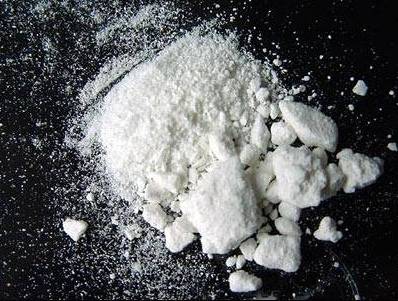
        Across the United States, citizens abuse many different drugs in order to obtain a high that elevates their mood. While these drugs are all extremely serious, cocaine is an especially dangerous substance that over one-and-a-half million Americans use, despite the negative effects and consequences resulting from its abuse ("About.com"). Many cocaine users are drawn to the drug after experiencing unhealthy influences in their childhood such as unstable families and neighborhoods. Searching for euphoric feelings, an excited state, and increased sociability to escape the devastating influences, cocaine users are often unable to break the addiction that is simultaneously destroying their bodies (Arkangel). By choosing abuse cocaine, users enter a debilitating three step process that consists of depression, addiction, and withdrawal.

        A serious problem that cocaine causes in its users is depression. When cocaine is taken, it circulates through a person’s bloodstream and eventually reaches the brain and its pleasure receptors. The cocaine then increases the levels of neurotransmitters in the brain, such as serotonin and dopamine, which in turn cause the user to experience feelings of extreme pleasure, known as euphoria (Arkangel). After the drug begins to wear off, these neurotransmitter levels once again return to their normal state, and sometimes lower, leading to extreme depression and a craving for more cocaine ("NIDA"). Depression resulting from cocaine use is so severe that according to the Board Certified Psychiatric Pharmacist, W. Alexander Morton, "cocaine has been found to be present in as high as 18% to 22% of [suicide] cases" (Morton). Without cocaine to replenish the depleted amounts of serotonin and dopamine in a user’s brain, the person will suffer from high emotional stress and anxiety. These feelings of depression may frequently lead to a dependency on cocaine as the only way to elevate a person’s mood, which will eventually turn into a binding addiction (Hayon).

      After a person decides to take more cocaine in order to raise his mood, the user enters a long struggle in the form of addiction. The change in the amount of dopamine in a cocaine abuser’s brain causes the abuser to form a bond with cocaine, taking increasing amounts of the drug in order to relieve his depression. As the brain adapts to the effects of the cocaine, a tolerance is built up, forcing the individual to intake higher doses of the drug in order to retrieve the euphoric feeling ("NIDA"). With depression continually worsening and the urge to take cocaine increasing, Dr. Michael Bozarth of Concordia University states that "cocaine is at least as addictive as heroin" (Eckholm). While cocaine abusers continue to supplement their addictions, the habit will lead to digestive problems, a breakdown of the central nervous system, physical deterioration, or even death within its users (Cocaine). If an addict decides that he needs or wants to remove himself from the addictive cycle, he must enter the last stage of cocaine use, withdrawal.

     When a cocaine addict chooses to end their addiction, the individual must experience an immediate process known as withdrawal. When an addict’s body craves more cocaine but does not receive it, the user begins to experience an emotional and physical decline that can last from a few hours to several days (Hartley). While going through withdrawal, the individual may experience sleep disturbances, depression, nausea, shaking, and muscle pain as a part of the healing process ("Symptoms"). The depression experienced during withdrawal is very enduring because, according to W. Alexander Morton, "serotonin [is] thought to be significantly lowered due to the chronic depletion caused by cocaine use" (Morton). In cases of daily use of cocaine, individuals may even experience the effects of withdrawal for months following the last period of use, in which case many of those suffering use sedatives or alcohol to ease their pain ("Cocaine Withdrawal").Withdrawal can be exceptionally painful and dangerous, yet it is the final step in the cocaine addiction process that may result in an addict’s ability to eliminate their dependency on cocaine forever.

     The decision to use cocaine or not is an event that may dramatically impact a person’s life in various ways. Whether an individual is influenced by a negative neighborhood or by an unhealthy family environment, cocaine use is a dramatic event that can destroy a human’s life if it is not controlled, addressed, and corrected. As lives across the nation and the world are affected by cocaine and the consequences of its use, humans continue to suffer as the drug overtakes individuals and all aspects of their lives. By choosing abuse cocaine, users enter a debilitating three step process that consists of depression, addiction, and withdrawal.


Works Cited
"About .com: Alcoholism." About.com. The New York Times Company, Sep 2009. Web. 20 Oct 2010. http: //alcoholism.about.com/cs/coke/f/coke_faq03. htm
Arkangel, Carmelito. "Cocaine Abuse." eMedicineHealth. WebMD. Inc., 08 Oct 2005. Web. 20 Oct 2010. http ://www.emedicinehealth.com/cocaine_abuse/page2_em
"Cocaine." The Columbia Encyclopedia, Sixth Edition. 2008. Encyclopedia.com. 24 Oct. 2010 <http://www.encyclopedia.com>.
"Cocaine Withdrawal." Medicine Plus. U.S. National Library of Medicine, 19 Aug 2010. Web. 24 Oct 2010. <http://www.nlm.nih.gov/medlineplus/ency/article/000947.htm>.
Eckholm, Erik. "Cocaine's Vicious Spiral: Highs, Lows, Desperation." NYTimes.com. The New York Times, 17 Aug 1986. Web. 24 Oct 2010. <http: //www./nytimes.com/<http://<http://www.nytimes.com/1986/08/17 /we eki nreview/cocaine-s-vicious-spiral-highs-lows-desperation.html>.
Hartley, Elizabeth. "What to Expect from Cocaine Withdrawal." About.com. The New York Times Company, 12 Aug 2010. Web. 24 Oct 2010. <http ://addictions.a bout.com/od/cocaine/a /W hat-To-Expect-From-Cocaine-Withdrawal.htm>.
Hayon, Rachel. "The Symptoms of Addiction Withdrawal-Different Drugs, Different Dangers." Addiction Search. Addiction Search, 23 Oct 2010. Web. 24 Oct 2010. <http ://www.<http://www.addicti onsearch.com/treatment_articles/article/the-symptoms-of-addiction-withdrawal-different-dru gs-different-dangers_67.html
Morton, W. Alexander. "Cocaine and Psychiatric Systems." PubMed Central. National Center for Biotechnology Information, 8 July 1999. Web. 24 Oct 2010. <http ://www.ncbi.nlm.nih.gov /pmc/articles/PMC181074
"NIDA InfoFacts: Cocaine." National Institute on Drug Abuse. National Institute on Drug Abuse, Mar 2010. Web. 24 Oct 2010. <http://www.nida.nih.gov/Infofacts/cocaine.html>.
"Symptoms of Cocaine Withdrawal." WrongDiagnosis. Health Grades Inc., 6 Oct 2010. Web. 24 Oct 2010. <http: //www.wrongdiagnosis.com/c/cocaine_withdrawal/symptoms.htm>.

Wednesday, October 6, 2010

Essay 3 Organization

Thesis
The decision to use cocaine leads to a three step chain of events including depression, addiction, and withdrawal.

Paragraph 2
  • Using cocaine raises dopamine and serotonin while it is affecting the body
  • Levels of serotonin and dopamine drop significantly after cocaine use
  • Users need more cocaine to elevate their mood
  • 18-22% of suicides have been found to be related to cocaine
Paragraph 3
  • Tolerance to cocaine is built up and more is needed to get a person high
  • Addiction sets in as a person needs the drug to overcome depression
  • "Cocaine is at least as addictive as heroin"
  • Long-term use can result in sleep disturbances, deterioration of the nervous system, and death
Paragraph 4
  • Cravings for cocaine can last for months following the end of long-term use
  • Withdrawal can cause shaking, nausea, muscle pain, and depression
  • Serotonin levels are thought to be severely depleted due to cocaine use
  • People experiencing withdrawal may take sedatives to ease the pain

Tuesday, October 5, 2010

Drugs

Why do so many people use drugs?
Are there really differences between medicinal and illegal drugs?
Are medicinal drugs beneficial to society?
Can the spread of illegal drugs be stopped?
What leads people to the use of drugs?

The use of cocaine often causes addiction, depression, and withdrawl within its users.
What is a drug?
Drug= 1. a substance used as a medication or in the preparation of medication
          2.something and often an illegal substance that causes addiction, habituation, or a marked change in consciousness


Drug effects

http://www.addictionca.com/illegal-drugs.htm
  • Drug Abuse Warning Network (DAWN) estimates that 1,449,154 Emergency Department visits were related with drug misuse or abuse in 2005
http://www.acep.org/pressroom.aspx?id=26004
  • Illegal drugs  account for about 52,000 drug-related deaths and an estimated $160 billion in economic costs each year, according to the Office of National Drug Control Policy.
http://en.wikipedia.org/wiki/Substance_abuse#cite_note-9
Burke PJ, O'Sullivan J, Vaughan BL (November 2005). "Adolescent substance use: brief interventions by emergency care providers". Pediatr Emerg Care 21 (11): 770–6. PMID 16280955. 
  • Drug abuse including alcohol may lead to health problems, social problems, morbidity, injuries, unprotected sex, violence, deaths, motor vehicle accidents, homicides, suicides, physical dependence or psychological addiction
Violence
http://www.whitehousedrugpolicy.gov/publications/factsht/crime/index.html
  • Past year (1996) illicit drug users were also about 16 times more likely than nonusers to report being arrested and booked for larceny or theft; and more than 9 times more likely to be arrested and booked on an assault charge. ]
http://www.pittsburghlive.com/x/pittsburghtrib/s_270507.html
  • Illegal drug sales "fuel the various types of violence that we see," U.S. Attorney Mary Beth Buchanan said.
http://www.daviddfriedman.com/Academic/drugs_and_violence/Drugs_and_violence.html
  • "A reson why drugs lead to violence-"One is drugs as in input to violent crime–people committing crimes under the influence of drugs that they otherwise would not commit."
  • "The other claim is that drug users commit crimes in order to get the money to pay for drugs."
  • "people in that industry have wealth in highly portable forms–drugs and cash–which make them obvious targets for theft or robbery"
  • "A second, suggested by Jeffrey Miron, is that violence occurs as a form of dispute resolution among people who cannot use legal channels because their disputes are occurring in an illegal industry."
Depression
http://www.addictionsearch.com/treatment_articles/article/the-symptoms-of-addiction-withdrawal-different-drugs-different-dangers_67.html
Hayon, Rachel. "The Symptoms of Addiction Withdrawal-Different Drugs, Different Dangers." Addiction Search. Addiction Search, 23 Oct 2010. Web. 24 Oct 2010. <http://www.addictionsearch.com/treatment_articles/article/the-symptoms-of-addiction-withdrawal-different-drugs-different-dangers_67.html>.
  • Constant use of the drug means that the body requires, more and more stimulation, this leads to dependence
  • Withdrawal syndrome is characterized by dysphoria, which is the opposite of euphoria
  • Dopamine is used by this center to cause the euphoria drug users enjoy
http://www.ncbi.nlm.nih.gov/pmc/articles/PMC181074/
Morton, W. Alexander. "Cocaine and Psychiatric Systems." PubMed Central. National Center for Biotechnology Information, 8 July 1999. Web. 24 Oct 2010. <http://www.ncbi.nlm.nih.gov/pmc/articles/PMC181074
  • "In suicide, cocaine has been found to be present in as high as 18% to 22% of cases"
    W. Alexander Morton, Pharm.D., B.C.P.P.(Board Certified Psychiatric Pharmicist)
Addiction
http://www.emedicinehealth.com/cocaine_abuse/page2_em.htm
Arkangel, Carmelito. "Cocaine Abuse." eMedicineHealth. WebMD. Inc., 08 Oct 2005. Web. 20 Oct 2010. <http://www.emedicinehealth.com/cocaine_abuse/page2_em
  • Researchers supported by the National Institute on Drug Abuse indicate that repeated exposure to cocaine causes a change in genes that leads to altered levels of a specific brain protein.
  •  This protein regulates the action of a normally occurring brain chemical called dopamine. It is a chemical messenger in the brain associated with the cocaine's pleasurable "rush"-the mechanism of addiction.
  • Addictive disease is believed to be caused by genetic background and environment.
  • Those from high-risk family environments are particularly susceptible
  • Users who have pleasurable experiences report varying degrees of euphoria; increased energy, excitement, and sociability; less hunger and fatigue; a marked feeling of increased physical and mental strength; and decreased sensation of pain
http://www.encyclopedia.com/topic/cocaine.aspx
"Cocaine." The Columbia Encyclopedia, Sixth Edition. 2008. Encyclopedia.com. 24 Oct. 2010 <http://www.encyclopedia.com>.
  • Long-term use can result in digestive disorders, weight loss, general physical deterioration, and marked deterioration of the nervous system
http://www.nytimes.com/1986/08/17/weekinreview/cocaine-s-vicious-spiral-highs-lows-desperation.html
Eckholm, Erik. "Cocaine's Vicious Spiral: Highs, Lows, Desperation." NYTimes.com. The New York Times, 17 Aug 1986. Web. 24 Oct 2010. <http://www.nytimes.com/1986/08/17/weekinreview/cocaine-s-vicious-spiral-highs-lows-desperation.html>.
  • ''In this sense, cocaine is at least as addictive as heroin.'' (Dr. Michael A. Bozarth- Concordia University in Montreal)
http://www.nida.nih.gov/Infofacts/cocaine.html
"NIDA InfoFacts: Cocaine." National Institute on Drug Abuse. National Institute on Drug Abuse, Mar 2010. Web. 24 Oct 2010. <http://www.nida.nih.gov/Infofacts/cocaine.html>.
  • With repeated use, cocaine can cause long-term changes in the brain’s reward system and in other brain systems as well, which may eventually lead to addiction.
  • With repeated use, tolerance to the cocaine high also often develops.
  • Cocaine-related deaths are often a result of cardiac arrest or seizure followed by respiratory arrest.

Withdrawal
http://addictions.about.com/od/cocaine/a/What-To-Expect-From-Cocaine-Withdrawal.htm
Hartley, Elizabeth. "What to Expect from Cocaine Withdrawal." About.com. The New York Times Company, 12 Aug 2010. Web. 24 Oct 2010. <http://addictions.about.com/od/cocaine/a/What-To-Expect-From-Cocaine-Withdrawal.htm>.
  • Feeling very tired is a normal part of cocaine withdrawal
  • The initial "crash" of cocaine withdrawal can vary in time and intensity, and can last from hours to days
http://addictions.about.com/od/drugdictionary/g/What-Is-Post-Acute-Withdrawal-Syndrome-Paws.htm
  • Post Acute Withdrawal Syndrome (PAWS) refers to withdrawal symptoms that continue to bother you after the acute initial detoxification of drugs has taken place
  • Post Acute Withdrawal Syndrome may last for weeks or months, sometimes even a few years after quitting.
"Cocaine Withdrawal." Medicine Plus. U.S. National Library of Medicine, 19 Aug 2010. Web. 24 Oct 2010. <http://www.nlm.nih.gov/medlineplus/ency/article/000947.htm>.
  • The craving and depression can last for months following cessation of long-term heavy use 0(particularly daily).
  • Withdrawal symptoms may also be associated with suicidal thoughts in some people.
  •  People who have cocaine withdrawal will often use alcohol, sedatives, hypnotics, or antianxiety medications such as diazepam (Valium) to treat their symptoms
http://www.ncbi.nlm.nih.gov/pmc/articles/PMC181074/
Morton, W. Alexander. "Cocaine and Psychiatric Systems." PubMed Central. National Center for Biotechnology Information, 8 July 1999. Web. 24 Oct 2010. <http://www.ncbi.nlm.nih.gov/pmc/articles/PMC181074
  • At this time, levels of the neurotransmitters norepinephrine and "serotonin are thought to be significantly lowered due to the chronic depletion caused by cocaine use"
  • "Suicide may be caused by depression, which occurs frequently in people using cocaine."
    W. Alexander Morton, Pharm.D., B.C.P.P.
http://www.wrongdiagnosis.com/c/cocaine_withdrawal/symptoms.htm
"Symptoms of Cocaine Withdrawal." WrongDiagnosis. Health Grades Inc., 6 Oct 2010. Web. 24 Oct 2010. <http://www.wrongdiagnosis.com/c/cocaine_withdrawal/symptoms.htm>.
  • Symptoms incude depression, nausea, sleep disturbance, muscle pain, vomiting, and shaking

Trafficking/Spread
"About.com: Alcoholism." About.com. The New York Times Company, 07 Sep 2009. Web. 20 Oct 2010. http://alcoholism.about.com/cs/coke/f/coke_faq03.htm
  •  In 1997, an estimated 1.5 million Americans (0.7 percent of those age 12 and older) were current cocaine users, according to the 1997 National Household Survey on Drug Abuse (NHSDA).
  • 19.5 million people over the age of 12 use illegal drugs in the United States (Mayo Clinic).
  • At least half of all Americans takes at least one prescription drug (Department of Health and Human Services (HHS))

Monday, October 4, 2010

Essay 2 Organization

Thesis
Peaceful revolutions are more successful than violent ones in the areas of gaining popular support, developing a positive image, and creating lasting changes.

Paragraph 2
  • The Peaceful Revolution v. the KKK
  • Peaceful Revolution used peaceful demonstrations
  • KKK used lynching and bombing
  • D. C. Stephenson was convicted for murder
  • The public opposed the image of the KKK so they didn't support it
Paragraph 3
  • The Third Reich v. the Civil Rights Movement
  • Civil Disobedience was practiced by MLK Jr.
  • Nazi extermination of inferior races
  • Peaceful march on D.C.
  • Civil Rights Act of 1964
  • Many people felt sympathy towards African Americans
Paragraph 4
  • The Civil War  v. Protestant Reformation
  • Martin Luther's 95 Theses were posted
  • Protestantism arose beginning with Calvinism 
  • 620,000 deaths in the Civil War
  • Little gains for the South